- Startup Intros
- Posts
- Trending Thursday #41
Trending Thursday #41
Nvidia's $1T Bet + The Great Chip Crunch + Cybersecurity's Billion-Dollar Week

Dev Chandra
March 19, 2026 • Estimated Reading Time: 8 minutes

Hi !
Here's what's been trending:
Jensen Huang doubled his AI chip forecast to $1T: Nvidia unveiled Vera Rubin, Groq 3 racks, DLSS 5, and NemoClaw at GTC 2026.
Micron's revenue surged 196% to $23.9B: Samsung signed an HBM4 deal with AMD. SK's chairman says the chip shortage will persist through 2030.
Cybersecurity startups raised $300M+ in a week: Xbow hit a $1B+ valuation. An AI hacking agent beat 99% of humans in elite competitions.
The Trump America AI Act becomes a bill: This Senate bill would replace all state AI laws with one federal framework.
Anthropic is capturing 73% of first-time enterprise AI buyers: Ramp data shows a dramatic shift from a 50/50 split with OpenAI in January.
Startup Intros has a simple mission: to help tech founders navigate everything in the early-stage from compliance to capital.
🔥 Startup Intros Events Coming Up
Mar 30: AI Startup Pitch Night: Founders pitch in front of an incredible group of investors. If you're building in AI, you should apply to pitch here!
Apr 28-29: Startup Grind Conference: 5,000+ founders, investors & operators at the Fox Theatre in Redwood City, and we're planning a happy hour! Get $100 off with code STARTUPINTROSGC!
🎟️ Want a FREE ticket? Refer Us To Your Friends!
We just launched a referral program: Every person you refer to Startup Intros counts as one entry toward a free conference pass. Winner drawn March 31st!
🟢 Nvidia GTC 2026: The $1T Keynote
Jensen Huang took the stage at the SAP Center and made the rest of GTC feel like a warm-up act. Nvidia is no longer a chip company; it's the OS for the AI economy.
🎤 Jensen's $1T Forecast
Jensen Huang doubled his bet on AI infrastructure. Nvidia now expects $1T+ in purchase orders for Blackwell and Vera Rubin chips through 2027, up from the $500B forecast he gave just a year ago. He put the compute leap in perspective: 40M times more compute in 10 years, from DGX-1 to Vera Rubin.
💻 The Hardware Stack
Vera Rubin, Nvidia's next-gen AI platform: Delivers 3.6 exaflops of compute and 260 TB/s of NVLink 6 bandwidth across 72 GPUs, with roughly 50x more tokens per watt than previous generations.
Groq 3 LPX rack: Packs 256 of Groq's language processing units into a single system, boosting tokens-per-watt by 35x when paired with Vera Rubin.
DLSS 5: AI graphics tech system that uses generative AI for photorealistic game lighting.
Space-1: Vera Rubin module for orbital data centers delivering 25x more AI compute than H100 in space.
🤖 NemoClaw + The Agent Stack
The software announcements matched the hardware:
NemoClaw: An enterprise-ready OpenClaw stack with built-in privacy and security controls.
Nemotron Coalition with Cursor, Mistral, Perplexity, LangChain, and Thinking Machines Lab to build open models on DGX Cloud.
Autonomous Vehicles: Uber will deploy Nvidia-powered robotaxis across 28 cities by 2028, starting with LA and SF next year. BYD, Geely, Nissan, Isuzu, and Hyundai are all building Level 4 AVs on Nvidia's Drive Hyperion platform.
Full Stack Roadmap: Feynman arrives in 2028 with the LP40 LPU (built with the Groq team), the Rosa CPU, and BlueField 5. Nvidia is selling the chips, building the agent platforms that run on the chips, funding the data centers that buy the chips, and now putting its AV software in cars that drive themselves.
📈 The Market Reaction
Nvidia said it's restarting H200 chip manufacturing for China after Beijing approved sales to many Chinese companies. Nvidia is also preparing Groq chips for the Chinese market, expected in May, reportedly without downgrades. Jensen told Axios that Nvidia has received orders from "many customers" (or really just China).
Translation: When one company forecasts $1T in chip orders, launches seven new chips, five rack systems, an enterprise agent stack, and an AV platform for 28 cities in a single keynote, it’s much more than product. Huang intends for Nvidia to be the infrastructure layer for every AI workload on Earth, and now in orbit.
🧠 The Great Chip Crunch
💥 Micron's 196% Revenue Surge
Micron reported Q2 revenue up 196% YoY to $23.9B, crushing the $19.7B estimate due to the soaring demand for memory chips. The company expects 2026 capex to exceed $25B, vs. $22.4B est., and forecasted Q3 revenue above estimates. Micron also completed its $1.8B acquisition of Powerchip's DRAM fab in Taiwan and is already planning a second fab of similar scale.
🔗 Samsung-AMD and the HBM4 Race
Samsung and AMD signed a preliminary deal for Samsung to supply its next-gen HBM4 for AMD's MI455X accelerators and DDR5 for AMD's Helios CPUs. Samsung is also weighing a shift toward multiyear memory chip contracts, a much longer timeframe than the industry norm, to help stabilize supply and ease concerns about shortages. SK Group Chair Chey Tae-won said the memory chip crunch will persist through 2030, with basic wafer supply lagging by 20%+.
⚠️ The Bottleneck Stack
The supply constraints go deeper than memory:
SemiAnalysis reported that TSMC's N3 logic wafer capacity has become one of the AI industry's biggest constraints, potentially prompting customers to diversify foundry sourcing.
Taiwan's chip sector faces critical supply risks as it relies on the Middle East for 37% of its LNG and much of its helium and sulfur, with the Iran war threatening both.
Qatari helium-producing energy hub shuttered after drone strikes, which accounted for ~33% of global helium production, a gas crucial to chipmaking.
Translation: The chip crunch isn't just about capacity; it's about helium from Qatar, wafers from Taiwan, and a war that threatens both.
🔒 Cybersecurity's Billion-Dollar Week
💰 The Funding Frenzy
This week, the cybersecurity sector raised $300M+:
Xbow raised $120M, led by DFJ Growth and Northzone, at a $1B+ valuation, with 100+ clients using its AI to probe apps for security vulnerabilities.
Surf AI emerged from stealth with $57M in Seed and Series A for agentic cybersecurity that helps teams read signals across identity and cloud.
RunSybil raised $40M, led by Khosla Ventures, to develop an AI agent that continuously performs autonomous penetration testing on live apps.
Native emerged from stealth with $42M ($11M seed + $31M Series A) to monitor cloud security across providers.
Scanner raised $22M Series A led by Sequoia for AI-powered threat hunting.
Raven raised $20M seed for runtime monitoring that intervenes in attacks as they unfold inside applications.
⚔️ AI Hackers vs. AI Defenders
Google, iVerify, and Lookout researchers discovered DarkSword, a hacking tool used by Russia-sponsored hackers to target iOS 18 via Ukrainian websites. And a ProPublica investigation found that Microsoft's FedRAMP-authorized GCC High cloud service, which handles sensitive government data, was approved in 2024 despite years of security concerns.
Israeli startup Tenzai says its AI hacking agent beat 99% of 125K participants at six elite competitions, using tailored OpenAI and Anthropic models at a cost of just $5K.
In other news at Meta, a rogue AI agent triggered a security alert after exposing sensitive data to unauthorized employees.
Translation: When AI makes both offense and defense cheaper and faster, the companies that invest in security are hoping that they won't be the next target.
🏛️ AI, Washington, and the Enterprise Race
🔵 Anthropic's Breakout
Ramp data shows Anthropic is capturing ~73% of all spending among companies buying AI tools for the first time, up from a 50/50 split with OpenAI in January. The Pentagon ban may be the best marketing campaign in AI history. Claude Code now holds 54% of the enterprise coding market vs. OpenAI's 21%. 1 in 5 businesses on Ramp now pay for Anthropic, up from 1 in 25 a year ago.
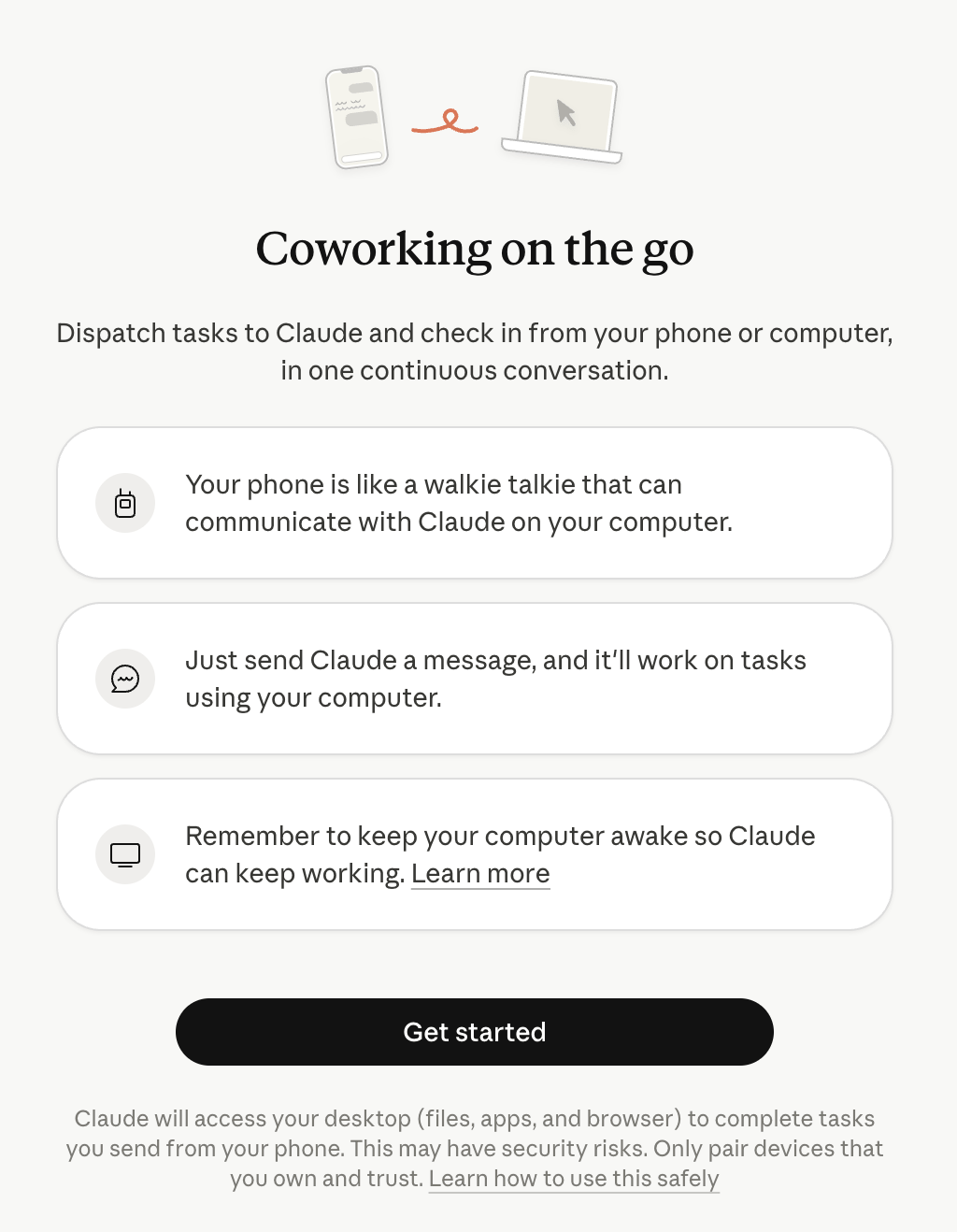
Claude Dispatch: Anthropic launched a remote control feature for Cowork that lets users text tasks from their phone while their Mac runs them. It's Anthropic's answer to OpenClaw's always-on agent model, but sandboxed and requiring user confirmation for every action. Anthropic also released a survey of 80,508 Claude users, calling it the largest and most multilingual qualitative study of AI users' views, hopes, and fears.
The DOD Sandoff: The Pentagon's 40-page filing called Anthropic an "unacceptable risk to national security," arguing the company might "disable its technology or preemptively alter the behavior of its model" during "warfighting operations" if its "red lines" are crossed. Nearly 150 retired federal and state judges filed an amicus brief supporting Anthropic, joining Microsoft and others from competing AI companies.
🟢 OpenAI's Countermoves
Several tech companies, including OpenAI, are privately encouraging the DOD to back away from the Anthropic supply chain designation. At the same time, OpenAI signed a deal with AWS to sell AI services to US government agencies for both classified and unclassified work, establishing AWS as a distributor of OpenAI models to public sector customers.
Internal Movements: CEO of Applications, Fidji Simo, told staff to avoid "side quests" in an all-hands meeting, describing a strategy shift to refocus on coding and business users. The product lineup followed: OpenAI launched GPT-5.4 mini and nano, aimed at agents, coding, and multi-modal workflows. GPT-5.4 mini approaches full GPT-5.4 pass rates at a much lower cost.
⚖️ The Federal AI Takeover
Sen. Marsha Blackburn released a Senate draft of the Trump America AI Act, a federal framework designed to replace state AI laws with a single national standard. The bill incorporates KOSA (the Kids Online Safety Act) and the No Fakes Act into one bill. This comes after Trump's opposition to state-level AI regulation drove a wedge in the GOP, killing Florida's proposed AI Bill of Rights that Governor DeSantis backed.
Across the Atlantic, the UK government withdrew its proposal to let AI companies train on copyrighted works unless creators opt out, following backlash from artists including Dua Lipa. The reversal is a significant win for creators and a blow to AI companies that lobbied hard for the opt-out model.
Translation: Anthropic is winning the enterprise market while fighting the Pentagon. OpenAI is pivoting to capitalize. And Congress is trying to write the rules for both of them. And all these stories seem to be converging together.
🚀 Product Launch Quick Hits
Stanford: AI chatbots affirm users 66% of the time: A study of 391K+ messages across ~5,000 chats found chatbots often validate delusional thinking. The Atlantic profiled how post-training suppresses creativity seen in earlier models.
Apple cracks down on vibe coding apps: Apple stopped AI-generated apps from pushing updates, citing rules on running code. Replit thinks Apple may approve opening AI-generated apps in a browser instead.
Google Stitch AI: Updated UI design tool with an "AI-native" design canvas and a reasoning design agent that turns natural language prompts into UI. Figma's stock dropped ~8% on the news.
Mistral Small 4: Mistral's first model to unify reasoning, multimodal, and coding capabilities from its Magistral, Pixtral, and Devstral lines into one model.
Mistral Forge: Helps enterprises build custom models trained on their own data using Mistral's open-weight model library.
Manus My Computer: Windows and macOS app that lets Manus' AI agent interact directly with local files, tools, and apps on your desktop.
Alibaba Wukong: Enterprise AI platform that coordinates agents to handle business tasks like document editing and research. Closed beta.
GLM-5-Turbo: Z.ai's faster, cheaper variant of GLM-5 optimized for agent-driven workflows and OpenClaw-style tasks.
World AgentKit: Tool that verifies a real human is behind the purchasing decisions of AI shopping agents.
Stripe Machine Payments Protocol: Stripe- and Paradigm-backed Tempo launches a blockchain protocol to handle financial transactions for AI agents.
👔 Personnel Quick Hits
PwC's AI ultimatum: US boss Paul Griggs says partners who resist AI have no place at the firm. PwC plans to convert some services into AI-powered automated tools.
DeepMind hires Bridgewater's chief scientist: Jasjeet Sekhon, who built Bridgewater's AIA Labs, joins as chief strategy officer.
Apple home hardware lead leaves for Oura: Brian Lynch, top engineering director for home devices since 2022, departs. A setback for a unit contending with product delays.
China penalizes Manus execs after Meta acquisition: Beijing is restricting Manus executives from leaving China for Singapore after Meta's $2B acquisition.
AI/crypto suffer Illinois defeat: Democratic voters rejected most industry-backed candidates after AI and crypto PACs spent $18M+.
🌟 Editor's Note
At Startup Intros, our mission is to bring the latest founder-investor news straight to your inbox, keeping you ahead in the fast-paced world of Silicon Valley.
💭 Parting Thoughts
What a week: Jensen forecast $1T in chip orders. Micron nearly tripled revenue. Samsung is locking in multiyear chip contracts because the shortage won't end until 2030.
There is a Senate bill that would federalize all AI regulation, while Anthropic is capturing 73% of first-time enterprise buyers and fighting the Pentagon in court.
The founders I talk to are watching two things:
The chip supply chain that determines whether their AI actually runs and
The regulatory landscape determines whether it's legal.
The big winners will be the ones who can navigate both simultaneously.
Till next time!
 | Dev Chandra |
Startup Intros Trending Thursday: Your trusted source for founder-investor insights, delivered with clarity and focus.