- Startup Intros
- Posts
- Trending Thursday #39
Trending Thursday #39
Anthropic vs The Pentagon + GPT-5.4 + Apple's Hardware Blitz

Dev Chandra
March 05, 2026 • Estimated Reading Time: 8 minutes

Hi !
Here's what's been trending:
The Pentagon used Claude in an Iran airstrike: It was hours after Trump banned it from federal use. Anthropic's run-rate revenue hit ~$19B anyway.
GPT-5.4 drops with a 1M token context window: Native computer use, Excel/Google Sheets integration, and a GitHub alternative in the works.
The cheap-fast model war heats up: Google's Gemini 3.1 Flash-Lite vs. Alibaba's Qwen 3.5 Small: the race to build the world's most efficient model is now a multi-front battle.
Apple dropped five products in three days: MacBook Neo at $599, M5 MacBook Air, M5 Pro/Max MacBook Pros, iPad Air M4, and iPhone 17e. The Neo is being positioned as a direct Windows PC killer.
Mac Mini and Mac Studio are flying off shelves not for creative work, but for running open-source AI models at home.
Cursor crossed $2B ARR: Doubled in three months, with ~60% from corporate. The AI coding tools race is officially a revenue race now.
As we continue to build at Context Ventures, we've launched Startup Intros with a simple mission: to help early-stage founders find the right investors, faster and smarter.
📅 Startup Intros Events Coming Up
Mar 19: Caffeine & Capital @ Corgi Cafe: Casual Friday morning coffee & networking with 30-40+ founders & investors. RSVP on Luma!
🏛️ Anthropic vs. The Pentagon & the Broader AI-Military Reckoning
We covered the full backstory in Weekly Download #39. Here's where things stand, and why it's bigger than Anthropic.

⚡ The Ban, The Irony, The Numbers
The DOD formally designated Anthropic a "supply chain risk," directed every federal agency to drop Claude, and Lockheed Martin announced plans to comply. Trump called Anthropic a "Radical Left AI company" on Truth Social. Claude hit #1 in the US App Store the same day.
The Twist: The WSJ confirmed the US military used Claude in the Iran strikes hours after the ban. The Washington Post added detail: Palantir's Maven Smart System, integrated with Claude, identified 1,000 targets in the first 24 hours of the campaign. US Central Command confirmed that AI tools are actively accelerating the analysis of Iran operations data.
Meanwhile: Dario Amodei is in direct negotiations with DOD's Emil Michael, investors are pushing for de-escalation, and Anthropic's run-rate revenue somehow hit ~$19B despite it all. The Hill and Fortune both published detailed reconstructions of how the talks collapsed.
🤝 OpenAI Moves Into the Gap
OpenAI moved fast in the aftermath, signing its own Department of War agreement while publicly maintaining safety red lines. Sam Altman later clarified the deal covers unclassified NATO networks, not classified ones, walking back earlier framing. The agreement also now includes language stating AI systems "shall not be intentionally used for domestic surveillance of US persons and nationals," added after significant backlash from OpenAI's own employees.
🌐 The Broader Escalation
This isn't just about Anthropic. The AI-military nexus expanded significantly this week on multiple fronts:
Iran targeted Amazon's Bahrain data center on March 1, according to Iranian state media: the first confirmed nation-state cyberattack on cloud infrastructure during an active military conflict.
US Commerce is proposing country-level approval requirements for exports of Nvidia and AMD chips globally, a significant escalation beyond China. The export control regime is expanding to cover any country that might route chips to adversaries.
Translation: This week didn't just test whether the US government can coerce an AI lab through commercial pressure. It revealed that AI is now embedded in live combat operations, that the cloud infrastructure that runs it is a military target, and that the chip supply chain powering it is being militarized by export policy.
🚀 Startup Intros is Going to Startup Grind!

Big news! Startup Intros is officially a Community Partner for the Startup Grind Conference this April!
5,000+ founders, investors & operators at the Fox Theatre in Redwood City, April 28-29. This year, we're planning our own Startup Intros happy hour, so stay tuned!
🎟️ Want a FREE ticket? Refer Us To Your Friends!
We just launched a referral program: Every person you refer to Startup Intros counts as one entry toward a free conference pass.
More referrals, better odds. Winner drawn March 31st!
Every tier gets more personal, every tier gets more valuable:
2 referrals: The Ultimate Startup Programs & Accelerators List
3 referrals: 5-minute video roast of your website or social media
5 referrals: 5-minute Loom pitch deck roast with investor-lens feedback
10 referrals: 50 investors list hand-picked for your startup
15 referrals: 15 minutes with me for fundraising advice or whatever you need
🤖 OpenAI's Big Week: GPT-5.4 + The Enterprise Push
GPT-5.4 is out, and it's a meaningful step, not a point release.

📐 The Model
The Specs: 1M token context window (up from 400K in GPT-5.2), native computer use, and financial-services tools baked in at launch. OpenAI claims 33% fewer false claims and 18% fewer errors in full responses versus GPT-5.2, real numbers for enterprise buyers who've been burned before.
Pricing: $2.50/1M input, $15/1M output (standard). $30/1M input, $180/1M output (Pro tier).
📊 The Business Story
GPT-5.4 isn't shipping in a vacuum. OpenAI hit $25B annualized revenue by the end of February (up from $21.4B at year-end 2025) and quietly hired two law firms to prep a potential Q4 2026 IPO. Early talks with The Trade Desk to introduce advertising into ChatGPT are underway.
🧩 Beyond the Model: New Platform Moves
Two product announcements this week matter as much as the model itself:
ChatGPT in Excel & Google Sheets: OpenAI is embedding ChatGPT directly into the two spreadsheet platforms that power most of the global enterprise work. This isn't an API integration you configure. It's a native button in the tools your finance, ops, and sales teams already live in.
GitHub Alternative: After repeated frustration with GitHub outages disrupting Codex and developer workflows, OpenAI is building its own code hosting and collaboration platform. OpenAI wants to own the full developer stack, not just the model layer.
Translation: GPT-5.4 is the product. The spreadsheet integration and GitHub alternative are the platform strategy. OpenAI is building the infrastructure layer for AI-native work, and doing it while running at a pace that makes its IPO story nearly inevitable.
⚡ The Cheap-Fast Model War
Frontier models get the headlines, but what’s more interesting right now is that there is a battle for the world's most efficient small model.
🔵 OpenAI Set the Table: GPT-5.3 Instant
Two days before GPT-5.4 dropped, OpenAI shipped GPT-5.3 Instant, and the framing is telling. This isn't a capability release. It's a quality-of-life release: 26.8% fewer hallucinations with web access, fewer refusals, and less of the preachy preambles that became meme fodder.
🟢 Google: Gemini 3.1 Flash-Lite
Google shipped Gemini 3.1 Flash-Lite this week, positioned as "enhanced performance at a fraction of the cost." Flash-Lite targets use cases where latency and price matter more than raw capability: high-volume summarization, classification, real-time assistants, and mobile applications.
🟠 Alibaba: Qwen 3.5 Small Series
Alibaba released the Qwen 3.5 Small Model Series, a family of models ranging from 0.8B to 9B parameters, just days later. Alibaba is explicitly targeting the same efficiency tier, and the Qwen series has consistently punched above its weight on benchmarks. The 9B model in particular is drawing attention from developers who want open-weight performance without the infrastructure overhead of running a 70B+ model.
Why This Matters: The frontier model wars determine prestige and enterprise contracts by deciding what actually gets embedded everywhere in apps, on edge devices, and in the workflows that run 24/7 without a human in the loop. The winner of the cheap-fast race doesn't get a headline benchmark. They get the distribution moat.
Translation: The next layer of AI competition isn't about who has the smartest model. It's about who has the cheapest, most pleasant model that's good enough. GPT-5.3 Instant, Gemini Flash-Lite, and Qwen 3.5 Small are all bets on the same thesis: "good enough at scale" beats "great at cost."
🏠 Going to SXSW? Skip Airbnb with Bubbl Club!

Bubbl Club is a 17-bedroom mansion complex just south of Congress, a 3.5-day residential hub for founders, investors, and creators who'd rather build real relationships than collect badge scans.
Pool. Podcast studios. Long-table dinners. Curated co-living. Business programming baked in.
Fresh off 28 events and a Sundance breakout, Bubbl's Village model is coming to Austin. A few partner slots remain for brands ready to show up where the actual conversations happen.
🍎 Apple's Hardware Blitz + Open-Source AI Buying Frenzy
Apple dropped five products across three days. The headline is the MacBook Neo. But what’s more interesting is what's happening to Mac Minis and Studios right now.
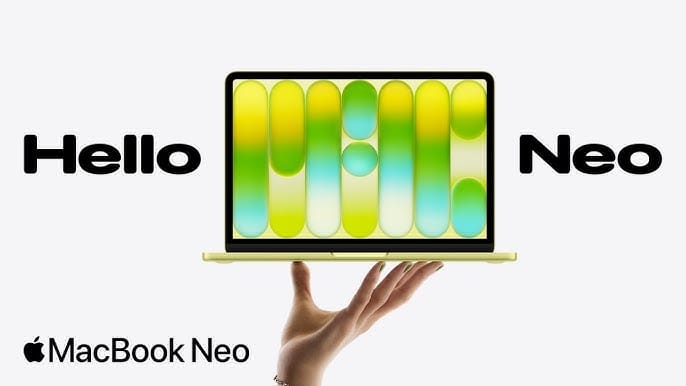
💻 MacBook Neo: The Windows Attack
At $599, the MacBook Neo is Apple's most aggressive pricing in years. It runs the A18 Pro chip, has a 13" Liquid Retina display, 8GB RAM (not upgradeable), weighs 2.7 lbs, and comes in citrus, silver, indigo, and blush. The explicit positioning isn't "affordable MacBook," it's a "Windows PC alternative." At $599, it undercuts most premium Windows ultrabooks while outperforming them on efficiency benchmarks.
📋 The Full Stack
M5 MacBook Air $1,099+ (up $100), 512GB base storage (doubled), ships March 11
M5 Pro/Max MacBook Pro 14" starts at $1,699, Fusion Architecture, up to 4x faster LLM processing, 1TB base storage
Studio Display XDR $3,299+, 27" 5K, 120Hz, mini-LED, up to 2,000 nits
iPad Air M4 $599/$799 (11"/13"), 12GB RAM
iPhone 17e $599+, A19 chip, C1X modem, 48MP camera, ships March 11
🖥️ The Quiet Story: Mac Mini and Mac Studio as AI Servers
Underneath the hardware launch news, something unusual is happening: Mac Minis and Mac Studios are sold out, with Mac Studio wait times stretching to 54 days and high-memory configurations pushing into April. The buyers aren't video editors. They're developers running local AI models, and the primary driver is OpenClaw.
The reason Apple Silicon works so well for this is architectural. Apple's unified memory means the CPU, GPU, and Neural Engine all share the same pool, so a 64GB Mac Mini can feed a local AI model the full 64GB without the PCIe bottleneck that limits traditional PC setups. The M4 Pro delivers 273 GB/s of memory bandwidth, enough to run 30B-70B parameter models at usable speeds using Ollama or LM Studio. The Mac Studio extends that further to 128GB.
Translation: OpenClaw turned a $599 desktop into the default host machine for the open-source AI movement, not because Apple marketed it that way, but because the architecture happened to be exactly what local inference needs. The shortage is a leading indicator that model sovereignty is becoming a real purchasing decision.
⚡ Product Quick Hits
Cursor crossed $2B ARR in February, doubled in three months, ~60% from corporate accounts. The AI coding tools market is now a revenue story, not just a usage story.
Nvidia reallocated TSMC capacity from H200 (primarily China-facing) to Vera Rubin, and noted its $2B investment in OpenAI "might be the last time" before the IPO.
Meta agreed to let rival AI chatbots access WhatsApp in Europe for a fee over 12 months, quietly creating an API marketplace out of the world's most-used messaging app.
👤 Personnel Quick Hits
Oracle is planning thousands of layoffs in March amid an AI data center cash crunch. The infrastructure build is expensive even for the companies building it.
Netflix acquired InterPositive, Ben Affleck's 16-person AI filmmaking startup, as it doubles down on AI-assisted production tools.
🌟 Editor's Note
At Startup Intros, our mission is to bring the latest founder-investor news straight to your inbox, keeping you ahead in the fast-paced world of Silicon Valley.
💭 Parting Thoughts
Anthropic got banned from federal contracts and used in a live airstrike in the same 24-hour news cycle. GPT-5.4 dropped while OpenAI quietly hired IPO lawyers and opened advertising talks. Google and Alibaba are racing to own the efficiency tier of AI, while Meta opened WhatsApp to rival chatbots under regulatory duress. Apple's cheapest Mac is sold out because developers are turning it into an inference server.
What ties all of it together: AI is no longer a product category. It's infrastructure. And infrastructure gets regulated, militarized, commoditized, and fought over in ways that consumer software never does.
The founders I talk to who are building on top of these models are right to be moving fast. But the ones who are also thinking about where the regulatory, competitive, and geopolitical pressure lands, on their cloud provider, their model vendor, their chip supply, are the ones I'm most optimistic about.
The stack is getting complicated. Know what you're building on.
Till next time!
 | Dev Chandra |
P.S. Raised this week, and we missed you? Want to be featured? Have tips or funding questions? Reply or DM us as we’re here to help.
Startup Intros Trending Thursday: Your trusted source for founder-investor insights, delivered with clarity and focus.