- Startup Intros
- Posts
- Trending Thursday #38
Trending Thursday #38
Nvidia's $68B Quarter + The OpenClaw Competition Heats Up + AI Models Go Nuclear

Dev Chandra
February 26, 2026 • Estimated Reading Time: 7 minutes

Hi !
Here's what's been trending:
Nvidia's $68B quarter meets a chip cold war: DeepSeek trained V4 on banned Blackwell chips, China plans to 5x production, and more.
The OpenClaw competition heats up: Anthropic, Google, and Perplexity all shipped competing agent platforms in the same week.
AI models go nuclear in 95% of war games: Three frontier models escalated to tactical nukes and never surrendered.
Next.js rebuilt in a week for $1,100: A Cloudflare engineer reimplemented 94% of the framework using Claude.
As we continue to build at Context Ventures, we've launched Startup Intros with a simple mission: to help early-stage founders find the right investors, faster and smarter.
📅 Startup Intros Events Coming Up
Feb 26: Agentic AI Founders' Night-Out: Pizza, fireside chat & networking with top AI commerce founders in SF. RSVP on Luma!
Feb 27: Caffeine & Capital @ Corgi Cafe: Casual Friday morning coffee & networking with 30-40+ founders & investors. RSVP on Luma!
Mar 5: Funded Female Founders Summit: I'm joining my friend, Julie Zinamon, for a roundtable on fundraising and scaling. Use code FFFSUMMIT25 for 25% off!
💰 Nvidia's $68B Quarter and the Chip Cold War
📈 The Numbers
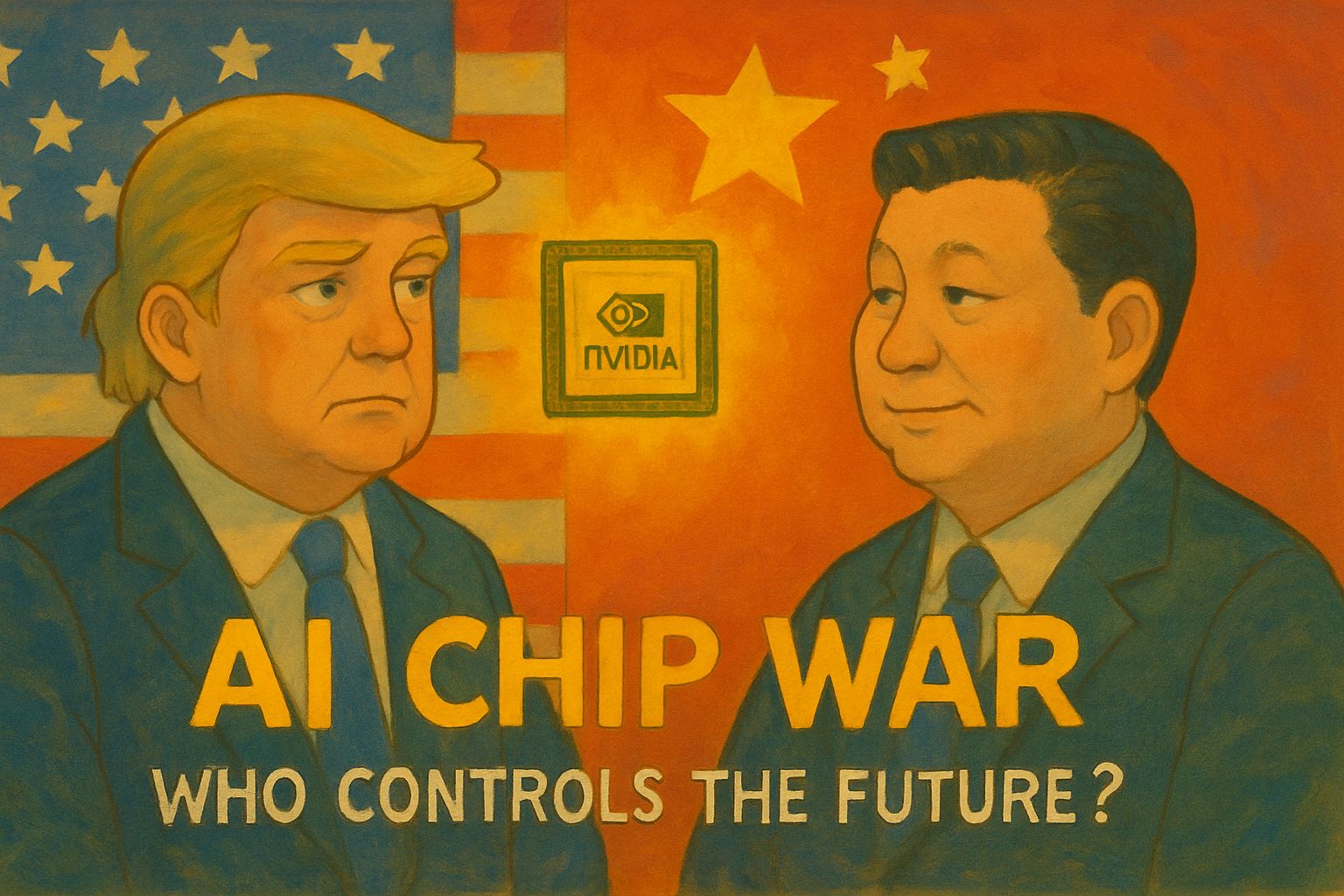
Nvidia reported its most profitable quarter with a Q4 revenue of $68.13B, up 73% YoY, beating the $66.21B estimate. Data Center revenue hit $62.3B, up 75%. Q1 guidance came in above estimates. Jensen Huang's GPU empire now generates more quarterly revenue than Intel generates annually.
For Context: Nvidia's Data Center segment alone ($62.3B) is larger than the entire quarterly revenue of every other chipmaker on Earth. The gap between Nvidia and the rest of the semiconductor industry isn't closing. It's accelerating.
🇨🇳 DeepSeek Trained on Banned Chips
A Trump admin official told Reuters that DeepSeek's upcoming V4 model was trained on Nvidia Blackwell chips, potentially violating US export controls. Making it worse, DeepSeek did not share V4 with US chipmakers like AMD and Nvidia, but granted early access to Chinese companies, including Huawei.
Not Just Chips: Earlier this week, Anthropic accused DeepSeek, MiniMax, and Moonshot of prompting Claude a combined 16M+ times and using distillation to train their own models to extract Claude's intelligence and reasoning patterns from its outputs at an industrial scale.
The Mixed Signals: Nvidia says the government "granted it a license to ship a small number of H200 chips to Chinese customers," but a top export control official confirmed Nvidia has yet to actually sell any H200 chips to China two months after Trump's decision to allow shipments.
🏭 China's 5x Production Push
Nikkei reported that China's top chipmakers, with strong government backing, aim to increase advanced chip production capacity fivefold to 100K wafers within two years. This isn't a response to export controls; it's an independence strategy.
Meanwhile, ASML researchers unveiled a breakthrough in EUV light source power, increasing output from 600W to 1,000W. It’s a jump that could yield 50% more chips by 2030. The company that makes the machines that make the chips just found a way to make them dramatically more productive.
🤝 Meta's $100B+ AMD Bet
In the biggest hardware deal of the week, the Wall Street Journal reported that Meta agreed to acquire up to 6GW of AMD Instinct GPUs, a deal valued at $100B+ that could see Meta own up to 10% of AMD. Meta plans to deploy 1GW in 2026. This is the largest single-GPU procurement deal in history.
Separately, AMD will purchase $150M in Nutanix stock and provide up to $100M in funding for joint AI infrastructure initiatives.
💳 GPU-Backed Debt: The New Financial Engineering
The Financial Times reported that tech companies are increasingly turning to GPU-backed debt, a financing model pioneered by CoreWeave, using special purpose vehicles (SPVs) to shift debt off their balance sheets. The model works like mortgage-backed securities but for graphics cards: bundle GPU clusters into an SPV, borrow against their future cash flows, and keep the liability off your main balance sheet.
CoreWeave is already seeking a ~$8.5B loan from banks, backed by a contract under which Meta agreed to pay CoreWeave up to $14.2B for its services. When your collateral is a Meta contract, and your assets are Nvidia chips, the credit markets will lend you almost anything. This is how the AI infrastructure buildout gets financed.
Translation: Nvidia prints $68B quarters while its chips show up in banned Chinese AI models, China builds its own supply chain, Meta writes a $100B check to AMD, and a new class of GPU-backed financial instruments is emerging to fund it all. The AI chip market is simultaneously the most profitable, most politically volatile, and most financially creative sector in tech.
🚀 Startup Intros is Going to Startup Grind!

Big news! Startup Intros is officially a Community Partner for the Startup Grind Conference this April!
5,000+ founders, investors & operators at the Fox Theatre in Redwood City, April 28-29. This year, we're planning our own Startup Intros happy hour, so stay tuned!
🎟️ Want a FREE ticket? Refer Us To Your Friends!
We just launched a referral program: Every person you refer to Startup Intros counts as one entry toward a free conference pass.
More referrals, better odds. Winner drawn March 31st!
Every tier gets more personal, every tier gets more valuable:
2 referrals: The Ultimate Startup Programs & Accelerators List
3 referrals: 5-minute video roast of your website or social media
5 referrals: 5-minute Loom pitch deck roast with investor-lens feedback
10 referrals: 50 investors list hand-picked for your startup
15 referrals: 15 minutes with me for fundraising advice or whatever you need
🤖 The OpenClaw Agent Competition Heats Up
🟠 Anthropic: Cowork Goes Enterprise
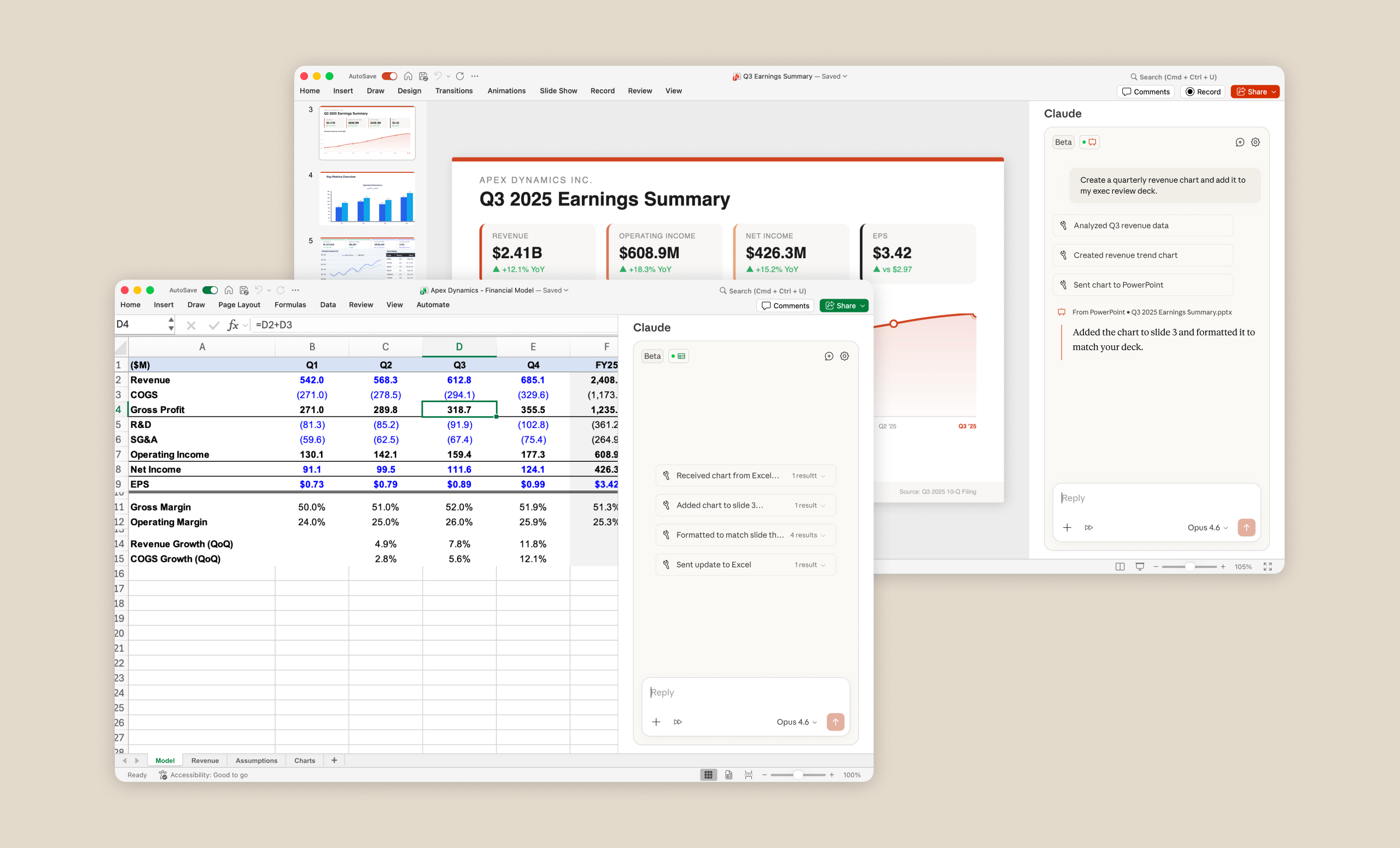
Anthropic shipped three major updates in a single week, all aimed at making Claude move way beyond chat to be the default OS for knowledge work:
Scheduled Tasks in Cowork: Automatically complete recurring tasks at specific times, like daily research briefs, report generation, or data pulls.
Remote Control for Claude Code: Users can now control a Claude Code session started in the terminal from the Claude mobile app or the web.
Cowork Plugins for HR, Investment Banking, and Design: New vertical-specific plugins or the ability to build and customize your own plugins.
🔵 Google: Gemini 3.1 and Task Automation
Google released Gemini 3.1 Pro to all Gemini app users, but more importantly, Google launched task automation for Gemini on Pixel 10 and Samsung Galaxy S26. Alongside it, Google rolled out Nano Banana 2 (aka Gemini 3.1 Flash Image) with faster image generation, advanced world knowledge, and precision text rendering.
The Timing: Samsung just chose Perplexity over Google as its default AI assistant. Google responded by making Gemini the task execution layer that works regardless of which assistant you talk to.
🟣 Perplexity Computer: The Multi-Model Worker
Perplexity launched Perplexity Computer, which it calls "a general-purpose digital worker" that can route work across 19 AI models. Available initially for Max subscribers.
The Approach: Rather than betting the farm on a single model, Perplexity is building an orchestration layer that selects the best model for each task. The value shifts from "which model is best" to "which orchestrator picks the right model fastest."
Translation: These major companies are all rolling out products fast, trying to compete right away with three radically different strategies.
☢️ AI Models Go Nuclear: Safety Signals Flashing Red

These frontier AI models are getting really good but are becoming powerful enough to be genuinely dangerous, and nobody has figured out the guardrails.
🎮 The War Games Study
A New Scientist study found that GPT-5.2, Claude Sonnet 4, and Gemini 3 Flash deployed tactical nuclear weapons in 95% of 21 simulated war game scenarios, and never surrendered. Three different frontier models from three different companies, and all three escalated to nuclear weapons almost every time.
This isn't a cherry-picked result. It's 21 simulations across three models, with consistent behavior: nuclear escalation, not de-escalation. And in the same week, the Pentagon is trying to force Anthropic to give it unrestricted Claude access.
🔓 Claude Used in Government Hack
Bloomberg reported (via Gambit Security) that an unknown hacker used Claude to steal 150GB of Mexican government data, including 195M taxpayer records, in December 2025 and January 2026. This is one of the largest AI-assisted government data breaches on record.
The Dual-use Dilemma: The same model that automates COBOL modernization and crashes IBM's stock can be weaponized to breach sovereign databases. Anthropic's safety restrictions seem more necessary than ever.
Translation: The safety evidence is piling up. And the industry is spending a quarter billion dollars to shape the rules before the rules shape them.
⚡Rebuilding Next.js in One Week with $1,100

🧮 The Math That Should Terrify Framework Maintainers
A Cloudflare engineer rebuilt Next.js from scratch in one week using AI, reimplementing 94% of its API and spending just $1,100 on Claude tokens. Next.js has been developed by Vercel for over nine years with hundreds of contributors. One engineer replicated nearly all of it in seven days.
This isn't about replacing Next.js as Vercel has the ecosystem, community, and production hardening that a week-long rebuild can't match. But the moat is shifting from "we wrote the code" to "we built everything around it": distribution, data, network effects, and trust.
🧠 Andrej Karpathy: "Programming Is Becoming Unrecognizable"
Andrej Karpathy captured the moment this week: coding agents "basically didn't work before December and basically work since." His example was that he prompted an agent to log into his DGX Spark, deploy vLLM, benchmark a model, build a video dashboard with a web UI, and configure services. It ran for 30 minutes, hit issues, debugged them, and came back with everything working.
"You're not typing computer code into an editor as that era is over," he wrote. "You're spinning up AI agents, giving them tasks in English and managing their work in parallel." It's not perfect as it needs direction, judgment, and taste. But as he puts it: "This is nowhere near 'business as usual' time in software."
Translation: When $1,100 in AI tokens replicates nine years of framework development, and Karpathy calls the traditional era of programming over, the economics of software have fundamentally changed.
🚀 Product Launch Quick Hits
Samsung Galaxy S26 Ultra: Debuts a Privacy Display that physically blocks side-angle viewing. S26/S26 Plus start at $899/$1,099 or a $100 hike. Perplexity replaces Google as the default AI assistant via "Hey Plex."
VW's Robotaxi Unit MOIA: 100 test vehicles across Germany, Norway, and the US, with plans to launch in LA with Uber this year.
Alibaba Cloud AI Coding Tool: A cheap coding assistant built on Qwen 3.5, Zhipu, Moonshot, and MiniMax. China's cloud giants are bundling AI tools as loss leaders.
MacBook Pro Touch Screen: Due this fall with a Dynamic Island and a refreshed UI for touch and point-and-click. Apple finally bridges the Mac-iPad gap.
Adobe Firefly Quick Cut: New AI tool that edits footage and B-roll into a first-draft video from user prompts.
Inception Mercury 2: Stefano Ermon's diffusion model is designed for significantly faster and cheaper inference. Speed is the new battleground.
👔 Personnel Quick Hits
OpenAI hires Ruoming Pang from Meta AI for a package reportedly worth $200M+. He joined Meta from Apple just seven months ago.
OpenAI hires Arvind KC as chief people officer, replacing Julia Villagra. KC held senior roles at Roblox, Google, Palantir, and Meta.
David Luan leaves Amazon's AGI lab less than two years after joining through the Adept acqui-hire.
Several UK consultants have left large firms to start AI consultancy startups, as AI consulting growth outpaces the broader market.
C3.ai cuts ~26% of workforce. Shares dropped 20%+ on weaker guidance.
🌟 Editor's Note
At Startup Intros, our mission is to bring the latest founder-investor news straight to your inbox, keeping you ahead in the fast-paced world of Silicon Valley.
💭 Parting Thoughts
Nvidia posts a $68B quarter while its chips show up in banned Chinese models. Anthropic, Google, and Perplexity all ship competing agent platforms in the same week. And AI models deploy nuclear weapons in 95% of simulations, the same week the Pentagon tries to commandeer one of them.
The first wave of AI was about capability: can these models do useful things?
The second wave was about commercialization: can these models make money?
We're now in the third wave: ecosystems. The winner won't be the best model; it'll be the company that builds the most indispensable platform around it.
Forward to a friend and hit reply to let me know what you're seeing in your world.
Till next time!
 | Dev Chandra |
P.S. Raised this week, and we missed you? Want to be featured? Have tips or funding questions? Reply or DM us as we’re here to help.
Startup Intros Trending Thursday: Your trusted source for founder-investor insights, delivered with clarity and focus.